
AI Isn’t Just Software—It’s Infrastructure. And Higher Ed Needs to Pay Attention
By Claire L. Brady, EdD
A recent article—“What Will It Take to Build the World’s Largest Data Center?” by Matthew S. Smith—offers a behind-the-scenes look at the infrastructure powering today’s AI boom. And while it may read like an engineering story, higher education leaders should be paying close attention.
When most higher education leaders think about AI, the conversation centers on tools: ChatGPT in the classroom, copilots in email, or policies for academic integrity.
But beneath all of that is a reality we’re not talking about enough:
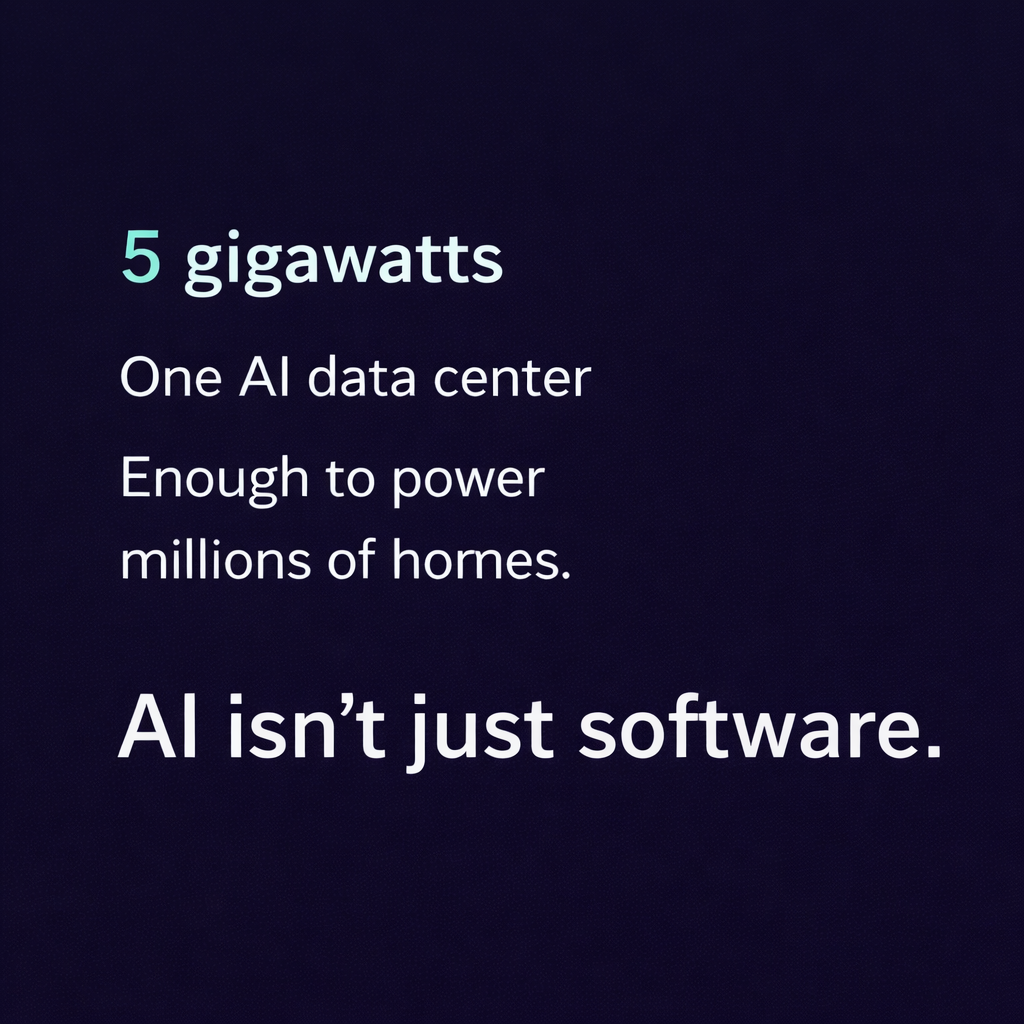
AI is not just a software shift. It’s an infrastructure shift.
And it’s happening at a scale that should give every campus leader pause. Right now, tech companies are building data centers so large—and so power-hungry—that they are forcing engineers to rewrite the rules of construction, energy, and computing.
One example: a single planned AI data center campus is expected to consume 5 gigawatts of power—roughly enough to power millions of homes.
Let that sink in.
This isn’t just innovation. This is industrial-scale transformation.
What This Means for Higher Ed
You may not be building a data center on your campus—but you are increasingly dependent on the ecosystem that is. Every AI tool your institution adopts—whether embedded in your LMS, CRM, advising platform, or productivity suite—relies on this infrastructure.
Which means:
AI is not free (even when it looks like it is).
The true cost is embedded in vendor pricing, contracts, and long-term dependencies.Your sustainability commitments are now connected to AI usage.
These systems require massive, continuous energy—often powered by fossil fuels.Your institution is part of a broader community impact story.
Data centers are already driving conversations about water use, energy strain, and local environmental effects.
In other words: AI adoption is no longer just a teaching and learning conversation—it’s an operational, financial, and ethical one.
Three Moves Higher Ed Leaders Should Be Making Now
1. Ask Better Questions About Your AI Ecosystem
Before adopting another tool, pause and ask:
Where is this tool hosted?
What infrastructure does it rely on?
What are the long-term cost implications?
This is not about becoming a technical expert—it’s about becoming an informed decision-maker.
2. Bring Sustainability Into the AI Conversation
If your institution has climate commitments, AI must be part of that strategy.
Consider:
Including AI usage in sustainability reporting discussions
Partnering with IT and facilities to understand energy implications
Asking vendors about their energy sources and efficiency practices
AI doesn’t sit outside your ESG goals—it’s becoming central to them.
3. Elevate AI Governance Beyond Policy
Most campuses are focused on acceptable use policies. That’s important—but insufficient.
Governance now needs to include:
Vendor strategy and risk assessment
Data infrastructure awareness
Alignment with institutional values and mission
This is cabinet-level work, not just IT oversight.
The Leadership Moment
We are in a familiar pattern- Higher education often engages technology at the point of use—when it shows up in the classroom or workflow. But by then, the underlying systems are already shaping the possibilities, the costs, and the constraints.
AI is no different.
The institutions that lead in this next chapter won’t just experiment with tools.
They will understand—and intentionally engage with—the infrastructure behind them.
Because the real question isn’t just: “How are we using AI?”
It’s: “What are we building our institution on—and are we doing it with intention?”
Read the full article here: https://spectrum.ieee.org/5gw-data-center?utm_source=flipboard&utm_content=topic/bigdata
Note: Image created using ChatGPT
